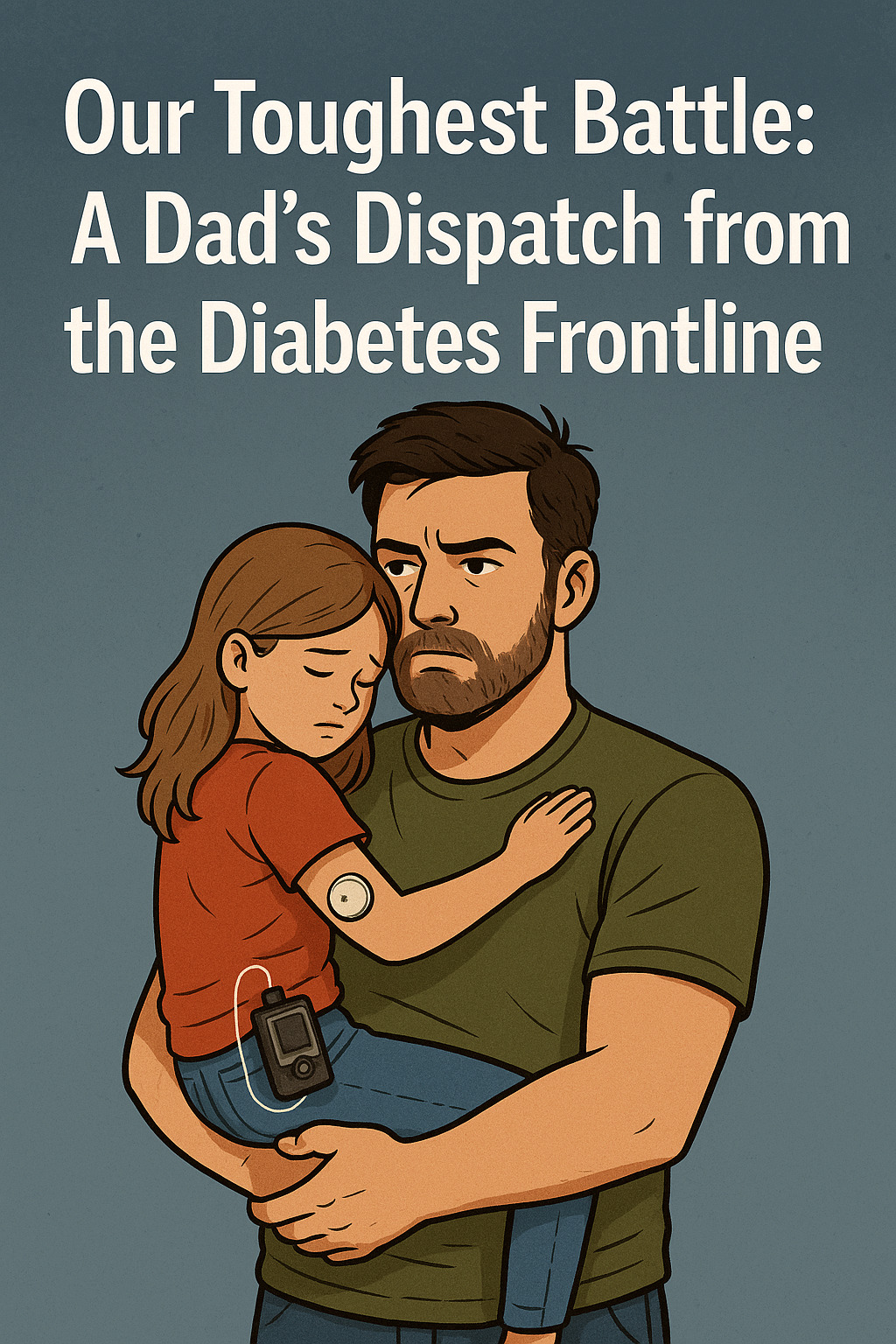
As a dad of eight, life in our home is usually a delightful mix of organised chaos, questionable budgeting, and the occasional strategic retreat to the biscuit cupboard. We navigate everything from nappy explosions to teenage angst with a blend of practical solutions and sheer, unadulterated luck. But nothing quite prepared us for the challenge we faced just before our fourth-born, our spirited daughter, turned four.
Something Wasn’t Right
It was peak COVID lockdown, a time when the world already felt a bit upside down. Our little girl, normally a whirlwind of cheeky energy, began to change. She was constantly thirsty, not just “I fancy a sip” thirsty, but a desperate, screaming, crying thirst that seemed unquenchable. Her boundless energy evaporated, replaced by constant tiredness and a worrying drowsiness. And then there was the weight loss, a noticeable fading of her normally rosy cheeks.
We did what any concerned parent would do – we took her to our local GP. He gave us reassurance, suggesting she was just suffering from constipation and booked a review for a few weeks’ time. A collective sigh of relief, right? Not quite.
An Urgent Trip to A&E
That evening, with the rest of the kids tucked in, the thirst returned with a vengeance. She wouldn’t eat. In a moment of parental desperation, we even tried to cheer her up with a pack of sweets. The result? Even more drowsiness. She was pale, her eyes struggled to stay open, and a cold wave of “this isn’t right” washed over us. It was clear we had to go to A&E.
The drive to the hospital was surreal. She perked up, became chatty, but what she was saying seemed… off-key. Not strange, just not quite her. We arrived, checked in at a makeshift cabin (COVID swabs and questions, naturally), and were then ushered into the main hospital. A doctor quickly assessed the situation, and then came the moment that changed everything.
A quick finger prick test.
Next thing I knew, it was like a flurry of activity. Dozens of nurses and doctors gathered around us, putting in cannulas and drips, checking this and that, talking hurriedly and quietly to each other. Through the frantic energy, I began to piece together snippets I overheard. “Diabetic.” My stomach dropped.
When she started to come around, her first words were desperate pleas for a drink. They wouldn’t let her have one. So, I gently wet her lips with a water-soaked tissue whenever I thought they weren’t looking. Small comforts in a tough moment.
The Initial Shock
Eventually, a doctor came to deliver the news. His explanation of diabetes was… direct. “High blood sugar isn’t so bad, but can lead to long-term complications. Low blood sugar, and she will die.” Right. Not exactly the comforting words you hope for as a worried dad.
We were moved up to the children’s ward. A bed was set up for me next to hers, but sleep was a luxury I couldn’t afford. A nurse came in every 30 minutes to check her blood sugar – a routine that now defines our daily lives.
The next morning, after finding reluctant babysitters from within our ‘bubble’, her mum arrived. What followed was an intense crash course in Type 1 Diabetes. We learned about injections, carb counting, and the relentless 24/7 checks. Our evenings in the ward were spent watching Fantastic Mr. Fox on repeat, the only entertainment available as the playrooms were off-limits due to COVID.
Learning to Live with Type 1
After what felt like weeks (it was actually four days, but time operates differently in a hospital), she was finally discharged on the morning of her fourth birthday. The hospital, with a touch of unexpected kindness, left a huge stuffed teddy with a ribbon on a chair next to her bed while she slept – a small beacon of normalcy in a very abnormal time.
What followed was the steepest learning curve my partner and I have ever encountered. The countless checks, day and night. The regular hospital visits. The daily injections. The meticulous carb counting. And then, the ongoing challenge of dealing with school and their inadvertent exclusion of her. It’s a constant effort, but I’m proud to say we’re making progress, or at least holding our own.
Now, at nine years old, our daughter takes everything in her stride. Singing lessons, acro, ballet, tap, street jazz, contemporary modern jazz – she does the lot. Her pancreas might not work, but her spirit is unbroken. She’s vowed to never be left out, never told she can’t do something because of her diabetes. She is, without a doubt, the bravest, most determined little girl I know. And we, her parents, couldn’t be prouder.